
Why do we use BLDC motors?In manufacturing, brushless motors are primarily used for motion control, positioning or actuation systems. Brushlessmotors are ideally suited for manufacturing applications because of their high power density, good speed-torquecharacteristics, high efficiency, wide speed ranges and low maintenance.Benefits of the brushless motorDC motors with no brushes mean no mechanical contact, no dust and no sparks.There are no motor brushes to wealout because the windings are electrically commutated.Exquisitely efficient small form factor BLDC motor that haspeak operating efficiency . High torque from a small form factor, with low power consumption and peak performanceat lower RPM for quiet operation.Speed and direction is controlled easily and accurately, offering you a full range of options with every motorThe Brushless Motors offers distinct advantages over the competition: exceptionally long service life (over 20000operating hours), very low sound level (no brushed switching), good efficiency (optimized motor control), integratedsensors and excellent dynamics.This motor features built-in controls,versatile and very simple to useModel IntroductionBLDC1625OUTPUT:APPROX 0.1W-5WINNER ROTORWEIGHT:14g(APPROX)Typical ApplicationPersonal CareHome AppliantionPower ToolsBusiness EquipmentMedical ApparatusMotor TerminationsNOPIN ARRANGEMENT1VCC2FG3CW/CCW4GND5PWMExternal DimensionsMajor Characteristic ParametersMODELVoltageNO LoadAt Maximum EfficiencyStallOperating RangeRatedSpeedCurrentSpeedCurrentTorqueOutputTorqueCurrentr/minAr/minAg.cmWg.cmABL1625-V14.5V-12V5V71450.03456780.1328.4090.4940.950.509BL1625-V24.5V-12V12V81000.0264300.0779.8250.64847.650.296Performance Curves

Why do we use BLDC motors?In manufacturing, brushless motors are primarily used for motion control, positioning or actuation systems. Brushlessmotors are ideally suited for manufacturing applications because of their high power density, good speed-torquecharacteristics, high efficiency, wide speed ranges and low maintenance.Benefits of the brushless motorDC motors with no brushes mean no mechanical contact, no dust and no sparks.There are no motor brushes to wealout because the windings are electrically commutated.Exquisitely efficient small form factor BLDC motor that haspeak operating efficiency . High torque from a small form factor, with low power consumption and peak performanceat lower RPM for quiet operation.Speed and direction is controlled easily and accurately, offering you a full range of options with every motorThe Brushless Motors offers distinct advantages over the competition: exceptionally long service life (over 20000operating hours), very low sound level (no brushed switching), good efficiency (optimized motor control), integratedsensors and excellent dynamics.This motor features built-in controls,versatile and very simple to useModel IntroductionBLDC1632OUTPUT:APPROX 0.1W-7WINNER ROTORWEIGHT:23.5g(APPROX)Typical ApplicationPersonal CareHome AppliantionPower ToolsBusiness EquipmentMedical ApparatusMotor TerminationsNOPIN ARRANGEMENT1VCC2FG3CW/CCW4GND5PWMExternal DimensionsMajor Characteristic ParametersMODELVoltageNO LoadAt Maximum EfficiencyStallOperating RangeRatedSpeedCurrentSpeedCurrentTorqueOutputTorqueCurrentr/minAr/minAg.cmWg.cmABL1632-V15V-12V6V67500.05252810.18815.310.5970.50.676BL1632-V25V-12V12V80000.02365240.10214.7560.987800.45Performance Curves

Why do we use BLDC motors?In manufacturing, brushless motors are primarily used for motion control, positioning or actuation systems. Brushlessmotors are ideally suited for manufacturing applications because of their high power density, good speed-torquecharacteristics, high efficiency, wide speed ranges and low maintenance.Benefits of the brushless motorDC motors with no brushes mean no mechanical contact, no dust and no sparks.There are no motor brushes to wealout because the windings are electrically commutated.Exquisitely efficient small form factor BLDC motor that haspeak operating efficiency . High torque from a small form factor, with low power consumption and peak performanceat lower RPM for quiet operation.Speed and direction is controlled easily and accurately, offering you a full range of options with every motorThe Brushless Motors offers distinct advantages over the competition: exceptionally long service life (over 20000operating hours), very low sound level (no brushed switching), good efficiency (optimized motor control), integratedsensors and excellent dynamics.This motor features built-in controls,versatile and very simple to useModel IntroductionBBLDC-2418OUTPUT:APPROX 0.1W-5WINNER ROTORWEIGHT:30g(APPROX)Typical ApplicationPersonal CareHome AppliantionPower ToolsBusiness EquipmentMedical ApparatusMotor TerminationsNOPIN ARRANGEMENT1VCC2FG3CW/CCW4GND5PWMExternal DimensionsMajor Characteristic ParametersMODELVoltageNO LoadAt Maximum EfficiencyStallOperating RangeRatedSpeedCurrentSpeedCurrentTorqueOutputTorqueCurrentr/minAr/minAg.cmWg.cmABL2418-V13V-24V6V56000.0842000.22818.60.672.370.66BL2418-V23V-24V12V60000.0547870.16927.441.07128.10.619BL2418-V33V-24V24V75000.0359660.12135.891.57171.70.458Performance Curves

Why do we use BLDC motors?In manufacturing, brushless motors are primarily used for motion control, positioning or actuation systems. Brushlessmotors are ideally suited for manufacturing applications because of their high power density, good speed-torquecharacteristics, high efficiency, wide speed ranges and low maintenance.Benefits of the brushless motorDC motors with no brushes mean no mechanical contact, no dust and no sparks.There are no motor brushes to wealout because the windings are electrically commutated.Exquisitely efficient small form factor BLDC motor that haspeak operating efficiency . High torque from a small form factor, with low power consumption and peak performanceat lower RPM for quiet operation.Speed and direction is controlled easily and accurately, offering you a full range of options with every motorThe Brushless Motors offers distinct advantages over the competition: exceptionally long service life (over 20000operating hours), very low sound level (no brushed switching), good efficiency (optimized motor control), integratedsensors and excellent dynamics.This motor features built-in controls,versatile and very simple to useModel IntroductionBLDC-2419OUTPUT:APPROX 0.1W-5WINNER ROTORWEIGHT:30g(APPROX)Typical ApplicationPersonal CareHome AppliantionPower ToolsBusiness EquipmentMedical ApparatusMotor TerminationsNOPIN ARRANGEMENT1VCC2FG3CW/CCW4GND5PWMExternal DimensionsMajor Characteristic ParametersMODELVoltageNO LoadAt Maximum EfficiencyStallOperating RangeRatedSpeedCurrentSpeedCurrentTorqueOutputTorqueCurrentr/minAr/minAg.cmWg.cmABL2419-V13V-24V6V56000.0842000.22818.60.672.370.66BL2419-V23V-24V12V60000.0547870.16927.441.07128.10.619BL2419-V33V-24V24V75000.0359660.12135.891.57171.70.458Performance Curves

Why do we use BLDC motors?In manufacturing, brushless motors are primarily used for motion control, positioning or actuation systems. Brushlessmotors are ideally suited for manufacturing applications because of their high power density, good speed-torquecharacteristics, high efficiency, wide speed ranges and low maintenance.Benefits of the brushless motorDC motors with no brushes mean no mechanical contact, no dust and no sparks.There are no motor brushes to wealout because the windings are electrically commutated.Exquisitely efficient small form factor BLDC motor that haspeak operating efficiency . High torque from a small form factor, with low power consumption and peak performanceat lower RPM for quiet operation.Speed and direction is controlled easily and accurately, offering you a full range of options with every motorThe Brushless Motors offers distinct advantages over the competition: exceptionally long service life (over 20000operating hours), very low sound level (no brushed switching), good efficiency (optimized motor control), integratedsensors and excellent dynamics.This motor features built-in controls,versatile and very simple to useModel IntroductionBLDC2430OUTPUT:APPROX 0.2W-25WINNER ROTORWEIGHT:60g(APPROX)Typical ApplicationPersonal CareHome AppliantionPower ToolsBusiness EquipmentMedical ApparatusMotor TerminationsNOPIN ARRANGEMENT1VCC2FG3CW/CCW4GND5PWMExternal DimensionsMajor Characteristic ParametersMODELVoltageNO LoadAt Maximum EfficiencyStallOperating RangeRatedSpeedCurrentSpeedCurrentTorqueOutputTorqueCurrentr/minAr/minAg.cmWg.cmABL2430-V13V-24V6V60000.14344840.43734.961.19141.891.338BL2430-V23V-24V12V69000.08655660.36754.392.58286.31.564BL2430-V33V-24V24V30000.0223140.0758.290.86262.690.246Performance Curves

Why do we use BLDC motors?In manufacturing, brushless motors are primarily used for motion control, positioning or actuation systems. Brushlessmotors are ideally suited for manufacturing applications because of their high power density, good speed-torquecharacteristics, high efficiency, wide speed ranges and low maintenance.Benefits of the brushless motorDC motors with no brushes mean no mechanical contact, no dust and no sparks.There are no motor brushes to wealout because the windings are electrically commutated.Exquisitely efficient small form factor BLDC motor that haspeak operating efficiency . High torque from a small form factor, with low power consumption and peak performanceat lower RPM for quiet operation.Speed and direction is controlled easily and accurately, offering you a full range of options with every motorThe Brushless Motors offers distinct advantages over the competition: exceptionally long service life (over 20000operating hours), very low sound level (no brushed switching), good efficiency (optimized motor control), integratedsensors and excellent dynamics.This motor features built-in controls,versatile and very simple to useModel IntroductionBLDC2819OUTPUT:APPROX 0.2W-20WINNER ROTORWEIGHT:70g(APPROX)Typical ApplicationPersonal CareHome AppliantionMotor TerminationsNOPIN ARRANGEMENT1U2V3WExternal DimensionsMajor Characteristic ParametersMODELVoltageNO LoadAt Maximum EfficiencyStallOperating RangeRatedSpeedCurrentSpeedCurrentTorqueOutputTorqueCurrentr/minAr/minAg.cmWg.cmABL2819-V16V-12V12V30000.06524290.276114.2492.8466001.175Performance Curves

Why do we use BLDC motors?In manufacturing, brushless motors are primarily used for motion control, positioning or actuation systems. Brushlessmotors are ideally suited for manufacturing applications because of their high power density, good speed-torquecharacteristics, high efficiency, wide speed ranges and low maintenance.Benefits of the brushless motorDC motors with no brushes mean no mechanical contact, no dust and no sparks.There are no motor brushes to wealout because the windings are electrically commutated.Exquisitely efficient small form factor BLDC motor that haspeak operating efficiency . High torque from a small form factor, with low power consumption and peak performanceat lower RPM for quiet operation.Speed and direction is controlled easily and accurately, offering you a full range of options with every motorThe Brushless Motors offers distinct advantages over the competition: exceptionally long service life (over 20000operating hours), very low sound level (no brushed switching), good efficiency (optimized motor control), integratedsensors and excellent dynamics.This motor features built-in controls,versatile and very simple to useModel IntroductionBLDC2830OUTPUT:APPROX 1W-50WINNER ROTORWEIGHT:100g(APPROX)Typical ApplicationPersonal CareHome AppliantionPower ToolsBusiness EquipmentMedical ApparatusMotor TerminationsNOPIN ARRANGEMENT1U2V3WExternal DimensionsMajor Characteristic ParametersMODELVoltageNO LoadAt Maximum EfficiencyStallOperating RangeRatedSpeedCurrentSpeedCurrentTorqueOutputTorqueCurrentr/minAr/minAg.cmWg.cmABL2830-V17V-12V7.4V36000.1831201.043861226506.35Performance Curves

Why do we use BLDC motors?In manufacturing, brushless motors are primarily used for motion control, positioning or actuation systems. Brushlessmotors are ideally suited for manufacturing applications because of their high power density, good speed-torquecharacteristics, high efficiency, wide speed ranges and low maintenance.Benefits of the brushless motorDC motors with no brushes mean no mechanical contact, no dust and no sparks.There are no motor brushes to wealout because the windings are electrically commutated.Exquisitely efficient small form factor BLDC motor that haspeak operating efficiency . High torque from a small form factor, with low power consumption and peak performanceat lower RPM for quiet operation.Speed and direction is controlled easily and accurately, offering you a full range of options with every motorThe Brushless Motors offers distinct advantages over the competition: exceptionally long service life (over 20000operating hours), very low sound level (no brushed switching), good efficiency (optimized motor control), integratedsensors and excellent dynamics.This motor features built-in controls,versatile and very simple to useModel IntroductionBLDC2847OUTPUT:APPROX 0.2W-35WINNER ROTORWEIGHT:80g(APPROX)Typical ApplicationPersonal CareHome AppliantionPower ToolsBusiness EquipmentMedical ApparatusClipperMotor TerminationsNOPIN ARRANGEMENT1VCC2FG3CW/CCW4GND5PWMExternal DimensionsMajor Characteristic ParametersMODELVoltageNO LoadAt Maximum EfficiencyStallOperating RangeRatedSpeedCurrentSpeedCurrentTorqueOutputTorqueCurrentr/minAr/minAg.cmWg.cmABL2847-V13V-24V6V22600.08218150.32878.171.11390.81.3BL2847-V23V-24V12V54000.1144740.562129.14.25754.592.722BL2847-V33V-24V24V24300.02819350.1199.171.46487.10.429Performance Curves

Why do we use BLDC motors?In manufacturing, brushless motors are primarily used for motion control, positioning or actuation systems. Brushlessmotors are ideally suited for manufacturing applications because of their high power density, good speed-torquecharacteristics, high efficiency, wide speed ranges and low maintenance.Benefits of the brushless motorDC motors with no brushes mean no mechanical contact, no dust and no sparks.There are no motor brushes to wealout because the windings are electrically commutated.Exquisitely efficient small form factor BLDC motor that haspeak operating efficiency . High torque from a small form factor, with low power consumption and peak performanceat lower RPM for quiet operation.Speed and direction is controlled easily and accurately, offering you a full range of options with every motorThe Brushless Motors offers distinct advantages over the competition: exceptionally long service life (over 20000operating hours), very low sound level (no brushed switching), good efficiency (optimized motor control), integratedsensors and excellent dynamics.This motor features built-in controls,versatile and very simple to useModel IntroductionBLDC2838OUTPUT:APPROX 0.2W-35WINNER ROTORWEIGHT:80g(APPROX)Typical ApplicationPersonal CareHome AppliantionPower ToolsBusiness EquipmentMedical ApparatusClipperMotor TerminationsNOPIN ARRANGEMENT1VCC2FG3CW/CCW4GND5PWMExternal DimensionsMajor Characteristic ParametersMODELVoltageNO LoadAt Maximum EfficiencyStallOperating RangeRatedSpeedCurrentSpeedCurrentTorqueOutputTorqueCurrentr/minAr/minAg.cmWg.cmABL2838-V13V-24V6V22600.08218150.32878.171.11390.81.3BL2838-V23V-24V12V54000.1144740.562129.14.25754.592.722BL2838-V33V-24V24V24300.02819350.1199.171.46487.10.429Performance Curves
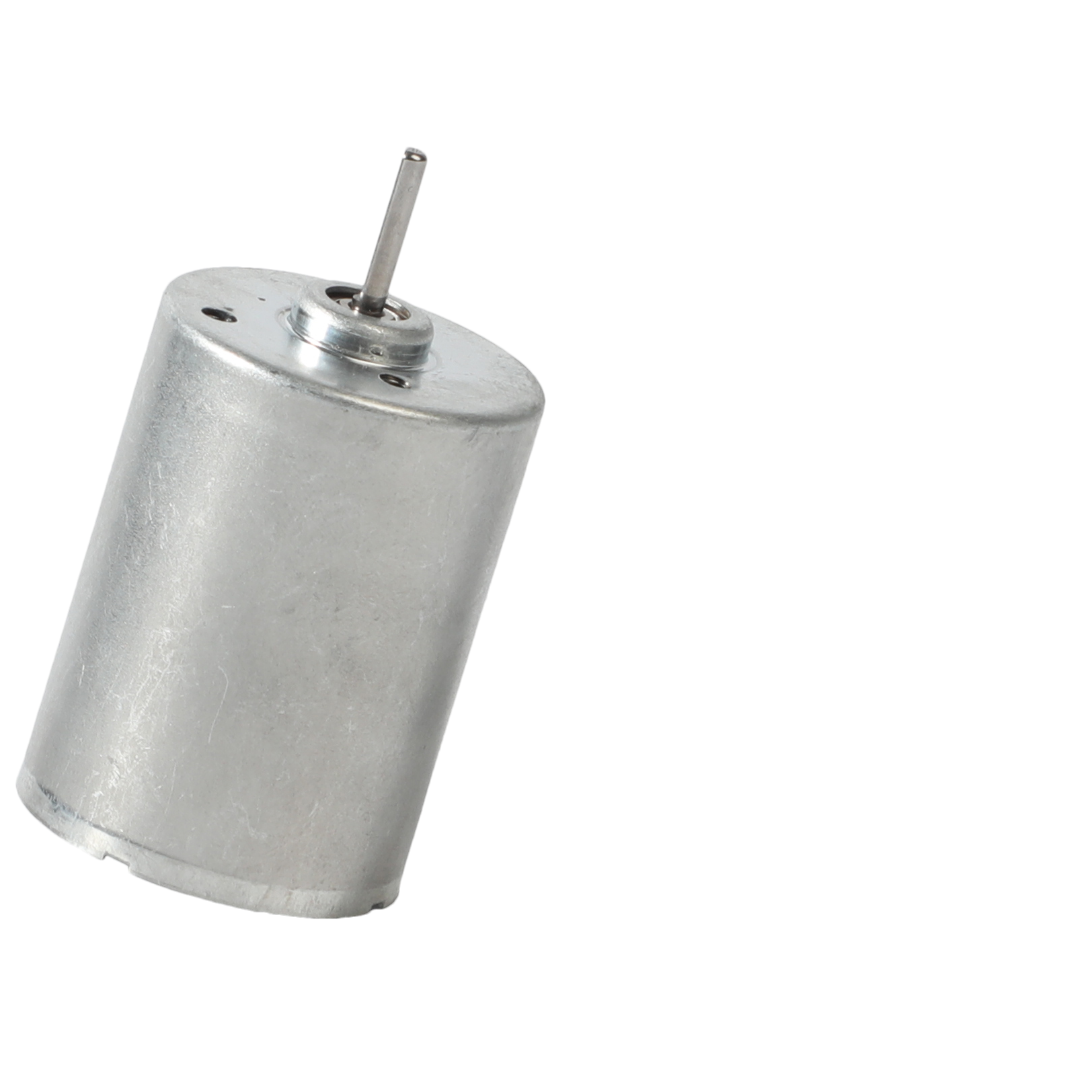
Why do we use BLDC motors?In manufacturing, brushless motors are primarily used for motion control, positioning or actuation systems. Brushlessmotors are ideally suited for manufacturing applications because of their high power density, good speed-torquecharacteristics, high efficiency, wide speed ranges and low maintenance.Benefits of the brushless motorDC motors with no brushes mean no mechanical contact, no dust and no sparks.There are no motor brushes to wealout because the windings are electrically commutated.Exquisitely efficient small form factor BLDC motor that haspeak operating efficiency . High torque from a small form factor, with low power consumption and peak performanceat lower RPM for quiet operation.Speed and direction is controlled easily and accurately, offering you a full range of options with every motorThe Brushless Motors offers distinct advantages over the competition: exceptionally long service life (over 20000operating hours), very low sound level (no brushed switching), good efficiency (optimized motor control), integratedsensors and excellent dynamics.This motor features built-in controls,versatile and very simple to useModel IntroductionBLDC29 HIGH SPEED,FOR HAIR DRYEROUTPUT:APPROX 50W-90WINNER ROTORWEIGHT:70g(APPROX)Typical ApplicationHome AppliantionPower ToolsMotor TerminationsNOPIN ARRANGEMENT1U2V3WExternal DimensionsMajor Characteristic ParametersGearCurrent Rating(A)Speed(r/min)Power Rating(W)Air velocity(M/S)Air flow(CMM)Air force(Pa)Voltage RatingLevel 10.8850005516.52.91300220VLevel 21.0950007517.53.051400Level 31.51070009018.53.21600ELECTRICAL CHARACTERISTICSInsulation resistanceTested with 500VDC between terminal and the body of flow-path:5MΩ MinWithstand Voltage1800VAC/0.5mA/1S No sparks or breakdownLifetimeContinuous running 500Hs Min

Why do we use BLDC motors?In manufacturing, brushless motors are primarily used for motion control, positioning or actuation systems. Brushlessmotors are ideally suited for manufacturing applications because of their high power density, good speed-torquecharacteristics, high efficiency, wide speed ranges and low maintenance.Benefits of the brushless motorDC motors with no brushes mean no mechanical contact, no dust and no sparks.There are no motor brushes to wealout because the windings are electrically commutated.Exquisitely efficient small form factor BLDC motor that haspeak operating efficiency . High torque from a small form factor, with low power consumption and peak performanceat lower RPM for quiet operation.Speed and direction is controlled easily and accurately, offering you a full range of options with every motorThe Brushless Motors offers distinct advantages over the competition: exceptionally long service life (over 20000operating hours), very low sound level (no brushed switching), good efficiency (optimized motor control), integratedsensors and excellent dynamics.This motor features built-in controls,versatile and very simple to useModel IntroductionBLDC3045OUTPUT:APPROX 0.2W-35WINNER ROTORWEIGHT:80g(APPROX)Typical ApplicationPersonal CareHome AppliantionPower ToolsBusiness EquipmentMedical ApparatusClipperMotor TerminationsNOPIN ARRANGEMENT1VCC2FG3CW/CCW4GND5PWMExternal DimensionsMajor Characteristic ParametersMODELVoltageNO LoadAt Maximum EfficiencyStallOperating RangeRatedSpeedCurrentSpeedCurrentTorqueOutputTorqueCurrentr/minAr/minAg.cmWg.cmABL3045-V13V-24V6V22600.08218150.32878.171.11390.81.3BL3045-V23V-24V12V54000.1144740.562129.14.25754.592.722BL3045-V33V-24V24V24300.02819350.1199.171.46487.10.429Performance Curves

Why do we use BLDC motors?In manufacturing, brushless motors are primarily used for motion control, positioning or actuation systems. Brushlessmotors are ideally suited for manufacturing applications because of their high power density, good speed-torquecharacteristics, high efficiency, wide speed ranges and low maintenance.Benefits of the brushless motorDC motors with no brushes mean no mechanical contact, no dust and no sparks.There are no motor brushes to wealout because the windings are electrically commutated.Exquisitely efficient small form factor BLDC motor that haspeak operating efficiency . High torque from a small form factor, with low power consumption and peak performanceat lower RPM for quiet operation.Speed and direction is controlled easily and accurately, offering you a full range of options with every motorThe Brushless Motors offers distinct advantages over the competition: exceptionally long service life (over 20000operating hours), very low sound level (no brushed switching), good efficiency (optimized motor control), integratedsensors and excellent dynamics.This motor features built-in controls,versatile and very simple to useModel IntroductionBLDC3045OUTPUT:APPROX 2W-70WINNER ROTORWEIGHT:120g(APPROX)Typical ApplicationPersonal CareHome AppliantionPower ToolsBusiness EquipmentMedical ApparatusMotor TerminationsNOPIN ARRANGEMENT1VCC2FG3CW/CCW4GND5PWMExternal DimensionsMajor Characteristic ParametersMODELVoltageNO LoadAt Maximum EfficiencyStallOperating RangeRatedSpeedCurrentSpeedCurrentTorqueOutputTorqueCurrentr/minAr/minAg.cmWg.cmABL3334-V16V-12V12V55860.15547670.901181.857.411239.185.24BL3334-V26V-12V12V46000.1338610.68153.245.34954.693.556Performance Curves

Why do we use BLDC motors?In manufacturing, brushless motors are primarily used for motion control, positioning or actuation systems. Brushlessmotors are ideally suited for manufacturing applications because of their high power density, good speed-torquecharacteristics, high efficiency, wide speed ranges and low maintenance.Benefits of the brushless motorDC motors with no brushes mean no mechanical contact, no dust and no sparks.There are no motor brushes to wealout because the windings are electrically commutated.Exquisitely efficient small form factor BLDC motor that haspeak operating efficiency . High torque from a small form factor, with low power consumption and peak performanceat lower RPM for quiet operation.Speed and direction is controlled easily and accurately, offering you a full range of options with every motorThe Brushless Motors offers distinct advantages over the competition: exceptionally long service life (over 20000operating hours), very low sound level (no brushed switching), good efficiency (optimized motor control), integratedsensors and excellent dynamics.This motor features built-in controls,versatile and very simple to useElectrical SpecificationsModel36BLY01ANo .of Phases3Gearbox Diameter36No .of Poles4Rated Voltage24 VDCRated Speed94 RPMRated Torque1.5 N .mRated Current2.5 AmpsOutput Power15WMotor Height L84mmOverall Weight0.40 KgReduction Ratio4 5 16 20 25 53 62 76 94 117Mechanical DimensionsWiring Diagram

Why do we use BLDC motors?In manufacturing, brushless motors are primarily used for motion control, positioning or actuation systems. Brushlessmotors are ideally suited for manufacturing applications because of their high power density, good speed-torquecharacteristics, high efficiency, wide speed ranges and low maintenance.Benefits of the brushless motorDC motors with no brushes mean no mechanical contact, no dust and no sparks.There are no motor brushes to wealout because the windings are electrically commutated.Exquisitely efficient small form factor BLDC motor that haspeak operating efficiency . High torque from a small form factor, with low power consumption and peak performanceat lower RPM for quiet operation.Speed and direction is controlled easily and accurately, offering you a full range of options with every motorThe Brushless Motors offers distinct advantages over the competition: exceptionally long service life (over 20000operating hours), very low sound level (no brushed switching), good efficiency (optimized motor control), integratedsensors and excellent dynamics.This motor features built-in controls,versatile and very simple to useModel IntroductionBLDC3657OUTPUT:APPROX 2W-70WINNER ROTORWEIGHT:235g(APPROX)Typical ApplicationPersonal CareHome AppliantionPower ToolsBusiness EquipmentMedical ApparatusMotor TerminationsNOPIN ARRANGEMENT1VCC2FG3CW/CCW4GND5PWM6aExternal DimensionsMajor Characteristic ParametersMODELVoltageNO LoadAt Maximum EfficiencyStallOperating RangeRatedSpeedCurrentSpeedCurrentTorqueOutputTorqueCurrentr/minAr/minAg.cmWg.cmABL3657-V16V-24V12V41000.1534970.854241.86.961618.34.859BL3657-V26V-24V24V36700.06431360.375262.36.21800.42.2Performance Curves

Why do we use BLDC motors?In manufacturing, brushless motors are primarily used for motion control, positioning or actuation systems. Brushlessmotors are ideally suited for manufacturing applications because of their high power density, good speed-torquecharacteristics, high efficiency, wide speed ranges and low maintenance.Benefits of the brushless motorDC motors with no brushes mean no mechanical contact, no dust and no sparks.There are no motor brushes to wealout because the windings are electrically commutated.Exquisitely efficient small form factor BLDC motor that haspeak operating efficiency . High torque from a small form factor, with low power consumption and peak performanceat lower RPM for quiet operation.Speed and direction is controlled easily and accurately, offering you a full range of options with every motorThe Brushless Motors offers distinct advantages over the competition: exceptionally long service life (over 20000operating hours), very low sound level (no brushed switching), good efficiency (optimized motor control), integratedsensors and excellent dynamics.This motor features built-in controls,versatile and very simple to useModel IntroductionBLDC3650OUTPUT:APPROX 2W-60WINNER ROTORWEIGHT:200g(APPROX)Typical ApplicationPersonal CareHome AppliantionPower ToolsBusiness EquipmentMedical ApparatusMotor TerminationsNOPIN ARRANGEMENT1VCC2FG3CW/CCW4GND5PWM6BRKExternal DimensionsMajor Characteristic ParametersMODELVoltageNO LoadAt Maximum EfficiencyStallOperating RangeRatedSpeedCurrentSpeedCurrentTorqueOutputTorqueCurrentr/minAr/minAg.cmWg.cmABL3650-V16V-24V12V38000.13532130.694192.65.141183.33.57BL3650-V26V-24V24V50000.0943210.58289.949.862119.13.662Performance Curves

Tuoke is a motor manufacturer with a history of more than 20 years. We are a national high-tech enterprise integrating scientific research, manufacturing, and sales. We have rich experience in manufacturing various gear DC motors, a strong R&D team, advanced equipment, skilled engineers, and workers, all of which ensure that we can provide customers with not only high-quality products but also professional technology.
Read More

20 +
Years Of Experience
Brushless motors, known for high efficiency and durability, use electronic commutation instead of brushes. Ideal for drones, EVs, and industrial tools, they offer precise control, low maintenance, and longer lifespan, making them essential in modern tech applications.
Read More


If you have questions or suggestions,please leave us a message, we will reply you as soon as we can!
Add : No.18,Liujiang Road, Liushi,Town, Yueqing City ,Zhejiang, China


Copyright © Wenzhou Tuoke Drive Technology Co.,Ltd All Rights Reserved.
We use cookies to help you navigate efficiently and perform certain functions. You will find detailed information about all cookies under each consent category below.
The cookies that are categorised as "Necessary" are stored on your browser as they are essential for enabling the basic functionalities of the site.
We also use third-party cookies that help us analyse how you use this website, store your preferences, and provide the content and advertisements that are relevant to you. These cookies will only be stored in your browser with your prior consent.
You can choose to enable or disable some or all of these cookies but disabling some of them may affect your browsing experience.
Necessary cookies are required to enable the basic features of this site, such as providing secure log-in or adjusting your consent preferences. These cookies do not store any personally identifiable data.
Functional cookies help perform certain functionalities like sharing the content of the website on social media platforms, collecting feedback, and other third-party features.
Analytical cookies are used to understand how visitors interact with the website. These cookies help provide information on metrics such as the number of visitors, bounce rate, traffic source, etc.
Performance cookies are used to understand and analyse the key performance indexes of the website which helps in delivering a better user experience for the visitors.
Advertisement cookies are used to provide visitors with customised advertisements based on the pages you visited previously and to analyse the effectiveness of the ad campaigns.
 Language


